Investment Analysis
The Smart Golden Visa Investor Chooses Value Over Price
Greece's residency-by-investment market has matured. With thresholds raised and price growth normalising, the decisive question is no longer how cheaply an investor can clear the bar — it is what the asset will be worth, and how easily it will be owned, ten years from now.
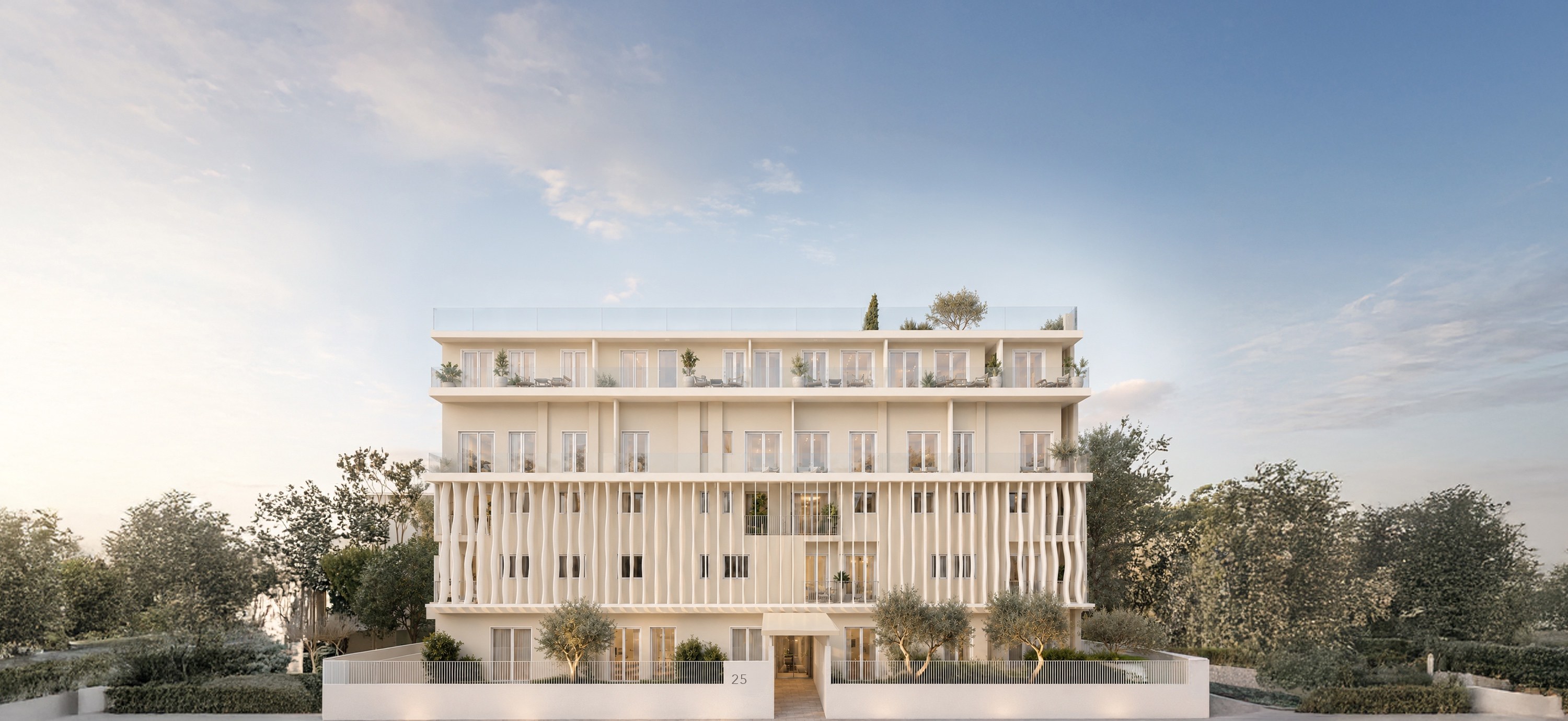
For a decade, Greece's Golden Visa was discussed almost exclusively in terms of a single number. Investors asked what the minimum was, and the market answered with the cheapest possible way to reach it. That conversation is now obsolete. Since the 2024 reform of the programme, the minimum acquisition value stands at €800,000 in the Region of Attica, the regional unit of Thessaloniki, Mykonos, Santorini and islands with more than 3,100 inhabitants, and €400,000 elsewhere, with the investment concentrated in a single property of at least 120 square metres. A reduced €250,000 route survives only for the conversion of buildings from non-residential to residential use, and for the restoration of listed buildings.
The practical consequence is easy to state and uncomfortable to absorb: it is no longer possible to obtain Greek residency by accident. An investor committing €800,000 in Attica is, by definition, making a serious real estate decision — one that will be judged on rental performance, running costs, tenant quality, resale liquidity and management burden long after the residence permit has been issued and renewed. Price got the investor through the door. Value determines whether the decision looks intelligent in 2036.
The numbers describe a normalising, not a cooling, market
Two data sets, read together, explain why the emphasis has shifted. The first is demand. According to Ministry of Migration and Asylum data reported by Kathimerini, approvals of new investor residence permits reached 8,879 in 2025, a 95 per cent increase on the 4,535 approved in 2024, as applications filed ahead of the threshold changes worked through the system. Chinese nationals remained the largest single group, at 47.9 per cent of permits; permits granted to Turkish investors rose 160 per cent to 3,291, and Israeli approvals rose 91.5 per cent to 636. Cumulatively, active initial and renewed investor permits stood at roughly 27,800 by the end of 2025, with a further 11,553 cases pending.
The second data set is price. The Bank of Greece's apartment price index rose 5.7 per cent year on year nationally in the first quarter of 2026 — 5.2 per cent in Athens — following average annual growth of 8.1 per cent in 2025 and 9.1 per cent in 2024, and 13.9 per cent as recently as 2023. The Bank of Greece also recorded net inflows for real estate acquisitions from abroad falling 25.3 per cent in 2025, to €2.06 billion from €2.75 billion.
When the market was rising 14 per cent a year, almost any purchase looked clever. At 5 per cent, the difference between a good asset and a mediocre one stops being cosmetic.
Neither figure signals distress. Greek residential values are still growing faster than most of the eurozone, and the tourism and services economy underpinning rental demand remains strong. What has changed is the margin for error. In a market compounding at 13 to 14 per cent, a poorly located, badly built or unmanageable apartment was still carried upward by the tide. In a market compounding at 5 to 6 per cent, the quality of the specific asset — not the momentum of the category — produces the return.
There is a second, less visible shift. The composition of demand has changed alongside its volume. The dominant motive among the fastest-growing investor groups is no longer speculative gain but capital preservation and optionality — a European base, Schengen mobility, an inflation hedge, a place a family could actually live in. Those buyers hold for longer, and long holding periods punish weak assets in a way that short-cycle flipping never did. A building with poor energy performance, an unresolved title, a hostile service-charge structure or a difficult residents' association is a manageable irritation over three years and a material loss over fifteen.
It also matters that Greek rental demand is broadening beyond the short-let tourism trade that drove the 2018 to 2023 cycle. Regulatory tightening on short-term rentals in the densest parts of Athens, combined with a structural shortage of good-quality long-term stock for domestic professional households, has made conventional letting more attractive on a risk-adjusted basis. Assets designed only for nightly rental — small, hard-finished, amenity-free, in saturated postcodes — are the most exposed to that change. Assets that work equally well as a long-term family home retain two exit markets instead of one.
Four questions that separate value from price
In advising international buyers, we find that almost every disappointing Greek property investment can be traced to a question that was never asked at the point of purchase. There are four.
- 01Is the location supported by infrastructure that is already funded and built, rather than promised? Metro lines, port investment and highway access change tenant catchments permanently; a marketing narrative does not.
- 02Was the building constructed to a standard that will still be lettable in 2040? Energy performance, acoustic separation, waterproofing and mechanical systems are invisible at signature and decisive at renewal.
- 03What will it cost to own, not merely to buy? Service charges, maintenance reserves, energy consumption, insurance and letting costs determine net yield; headline gross yields flatter almost every asset.
- 04Who will manage it, and who will buy it? An asset that cannot be run remotely, or resold to both a domestic and an international buyer, is illiquid regardless of its valuation on paper.
These questions favour a specific kind of asset: new-build or comprehensively rebuilt stock, in a district with committed public infrastructure, at a price per square metre that has not already discounted a decade of future improvement, with professional management available from day one. That combination is rarer than the volume of listings would suggest — and it is where advisory work earns its fee.
Case study: the Piraeus corridor
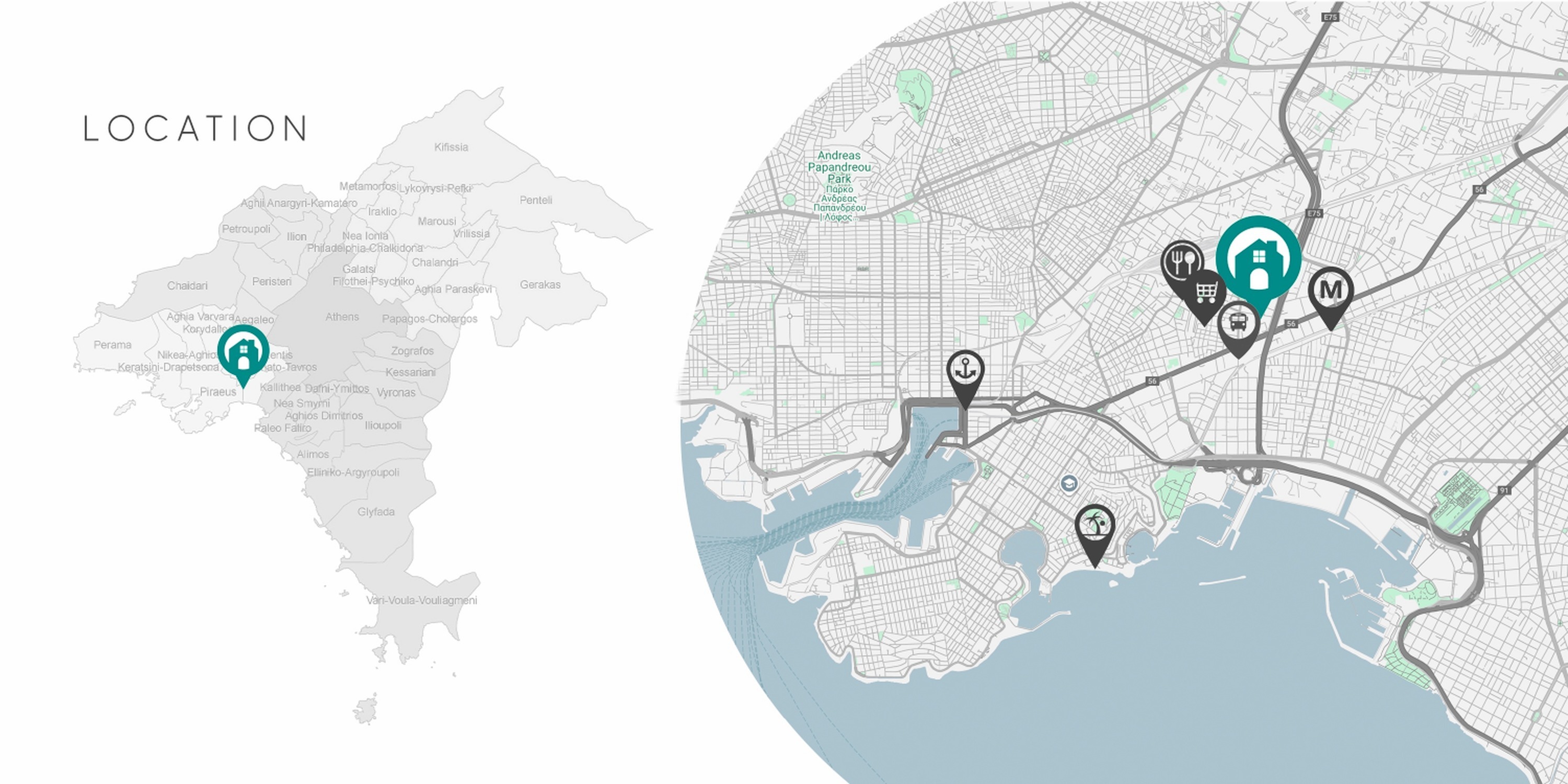
Piraeus is the clearest current example in Attica of infrastructure-led value rather than narrative-led pricing. The Piraeus Port Authority reported record 2025 revenue of €250.8 million, up 8.6 per cent, with cruise revenue and passenger traffic reaching an all-time high, up 24.8 per cent, consolidating Piraeus as the leading cruise hub of the eastern Mediterranean and its largest container port. That activity is not an abstraction for a residential investor: it is employment, business travel, hospitality demand and year-round tenancy within a defined radius.
Elysium Gardens (PAM-025), at P. Mela 25 in Ag. Ioannis Rentis, sits inside that radius. It is a 72-apartment development of one-, two- and three-bedroom homes between 40 and 81 square metres, one kilometre from the metro, three kilometres from the Port of Piraeus, two from the coastline and five from the Acropolis, with the airport 33 kilometres away. Phase I delivery is scheduled for the fourth quarter of 2027. We use it here not as a listing but as a test case: it is the kind of asset the four questions are designed to identify.
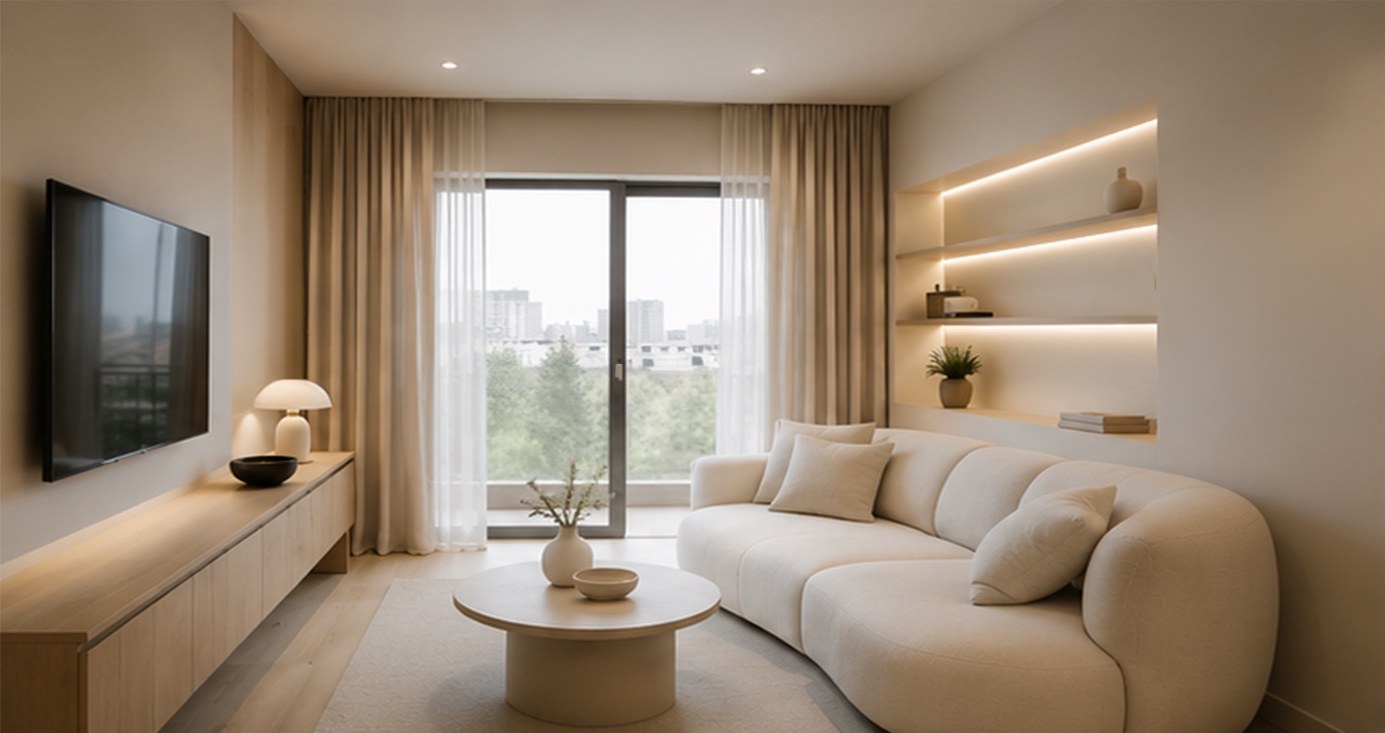
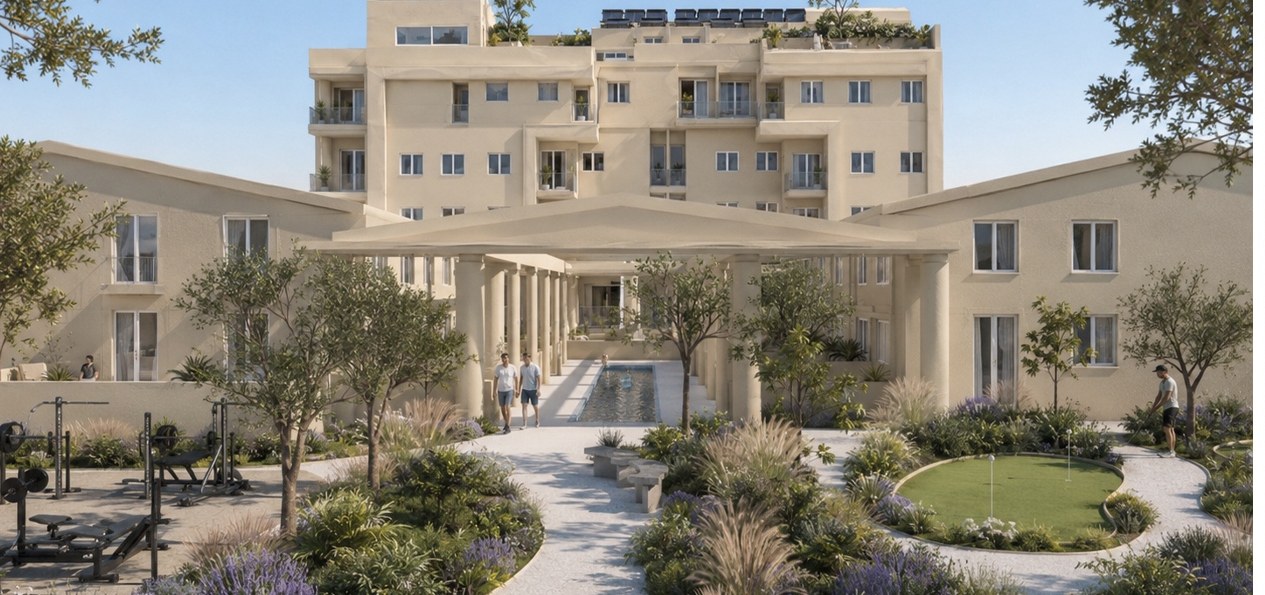
On construction, the specification is deliberately unglamorous where it matters — thermal envelope, glazing, acoustic performance, mechanical plant and waterproofing — because these are the line items that determine whether an apartment is still competitive at its fifth tenancy. On amenity, the scheme concentrates communal value where it is genuinely usable in the Attic climate: a rooftop terrace with sea and Acropolis views, a landscaped courtyard with a reflection pool, an outdoor gym and a mini-golf lawn. Communal amenity of this kind does two measurable things: it shortens void periods and it widens the pool of tenants prepared to pay a premium for a smaller unit.

On price discipline, the relevant metric is the cost per square metre relative to comparable new stock in the southern suburbs and in the historic centre, both of which have already absorbed most of their regeneration premium. An investor buying in a corridor where the infrastructure is delivered but the pricing has not fully re-rated is buying the same fundamentals at an earlier point on the curve.
The part nobody prices: after-sales
The most consistently underestimated component of a cross-border property investment is administration. A non-resident owner of a Greek apartment must maintain a tax registration number and annual filings, pay ENFIA property tax, register long-term leases with the tax authority, hold utility contracts, insure the building, participate in the management of the common parts, and — if the property is let — handle tenant selection, deposits, maintenance and turnover from another time zone.
None of this is difficult. All of it is relentless. It is also where returns quietly leak: an unoccupied month, an unclaimed insurance repair, a late filing penalty, a tenant dispute settled badly. An owner who has to solve each of these problems from abroad, in a second language, will underperform an identical asset that is professionally managed — and the gap compounds. This is why we treat after-sales management as part of the underwriting, not as a service to be arranged later.
Two identical apartments in the same building produce different returns. The difference is not the asset. It is the owner's operating model.
A checklist before signature
- 01Confirm the applicable threshold for the property's location and category before negotiating, and confirm the 120-square-metre and single-property conditions where they apply.
- 02Verify building permits, delivery guarantees and the developer's completion record on prior phases.
- 03Model net, not gross, yield: service charges, ENFIA, insurance, management, maintenance reserve and realistic voids.
- 04Test resale liquidity by asking who the second buyer is — a Greek household, an international investor, or nobody.
- 05Fix the operating model at purchase: who registers the lease, who holds the keys, who answers the tenant at 9pm.
The Greek Golden Visa has become what it should always have been: an incidental benefit of a sound real estate decision, not the purpose of a weak one. Investors who internalise that will continue to do well in Greece, at 5 per cent annual price growth as comfortably as at 14. Those who are still shopping for the cheapest route to a permit are, in this market, buying the residency and paying for it twice.
Sources
- Bank of Greece, Index of apartment prices, Q1 2026 and revised annual data (bankofgreece.gr).
- Bank of Greece, Annual Report 2025 — net inflows for real estate acquisitions from abroad.
- Ministry of Migration and Asylum data on investor residence permits, as reported by Kathimerini / eKathimerini, 2026.
- Piraeus Port Authority S.A., financial results for the year ended 31 December 2025.
- Law 5100/2024 amending the terms of the permanent residence permit for investors (Golden Visa).
This article is provided for information purposes and does not constitute legal, tax or investment advice. Golden Visa eligibility depends on the location, category, surface area and value of the specific property acquired; prospective investors should obtain independent legal advice before committing to a transaction.